Showing posts with label President Obama. Show all posts

Friday, September 6, 2013

Are Politics to Blame in the Attack on Ed Choice in Louisiana?

By Kevin P. Chavous

I have supported President Obama and known U.S. Attorney General Eric Holder for many years and have trusted that their motives are genuine.

But I am now extremely troubled by the motives behind the Dept. of Justice's desegregation lawsuit against the Louisiana scholarship program. In effect, the suit claims that allowing low income Louisiana kids to leave failing public schools in favor of better private schools somehow violates federal desegregation orders issued decades ago.

Since the lawsuit was filed last week, many have speculated as to the motives behind it; why was it filed?

Monday, August 26, 2013

Obama to Louisiana Children: ‘You must remain separate and not equal’


By. Kevin P. Chavous

On Saturday, the Obama Administration sued to block Louisiana’s Scholarship Program. This unprecedented and uncalled for action is a direct attack on thousands of low-income children. AFC Press release (http://bit.ly/15bWLvi).

As Adam Emerson, from Fordham summarizes it:

Why?

Because, according to the DOJ lawsuit, only a federal judge should be able to allow a poor black child to leave the failing school district. That’s right, it’s not up to the parent, but a federal judge.

Monday, July 15, 2013

Success of D.C. OSP Subject of Wall Street Journal Editorial

Last week, numbers were released showing that the D.C. Opportunity Scholarship Program is helping even more students in our nation's capital graduate from high school and go on to pursue higher education. The success of the D.C. OSP program was the subject of a Wall Street Journal editorial this weekend, which called on President Obama to consider supporting the program:

Friday, April 12, 2013

Obama Budget Excludes New Funding for Successful D.C. Opportunity Scholarship Program


President Obama announced his Fiscal Year 2014 budget this week, and unfortunately did not provide any new scholarship funding for the highly successful D.C. Opportunity Scholarship Program (OSP), despite having signed legislation in 2011 that reauthorized the program for five years.  The president's budget only includes funding for the statutorily required evaluation and program administration.

If you follow AFC’s blog, Facebook, and Twitter, you have seen countless stories posted about the success stories of this program.  Since its beginning during the 2004-05 school year, The OSP has helped thousands of children from low-income District families receive the education they deserve.  (Read about some the program’s success stories here, here, and here). 

Since its inception, more than 11,000 families have applied to participate in the D.C. Opportunity Scholarship Program and more than 6000 have been fortunate enough to get a scholarship.   

It is despicable that we are not doing more to ensure each and every child has access to the best education for their needs.  Kids should not have to remain trapped in schools that do not work for them when another viable option exists right now - and no child should be forced to stay in a school that does not meet their needs simply because of their family's income. 

Accordingto last federal evaluation of the program in 2010, 91 percent of children who used their D.C. opportunity scholarships graduated from high school - 21 percent more than those who sought but did not receive a scholarship and 30 percent higher than D.C. public schools.  Subsequent research by the program administrator for 2010 and 2011 showed that 94 percent of scholarship students graduated and 89 percent of those students enrolled in college.

Unfortunately, the future of the OSP – a program that has proven its ability to deliver real results for students trapped in schools that do not work for their needs – is in jeopardy.  

While funding exists for approximately 2,000 children, this year's program had just under 1,600 students participating because of implementation challenges between the Department of Education and the program administrator.  The program is carrying over funds each year that supporters believe should be used to provide more scholarships for eligible children.   

What is most interesting is that the president has gone on the record reiterating the need to provide low-income students with the access to a better tomorrow.   

Duringa speech in Decatur, Georgia in February, President Obama said “the size of your paycheck shouldn’t determine your child’s future.”   We agree full-heartedly.  Each child – no matter their family’s income or their zip code – should be entitled to the same opportunities to succeed.  So why restrict a program that is delivering real results for some of the poorest students in our nation’s capital? 

A better tomorrow starts with a quality education.  We cannot continue to sit back and wait for poor-performing schools to improve.  We must deliver all children the educational options necessary to open the door to greater opportunities tomorrow.

Monday, October 8, 2012

D.C. Mayor Supports Scholarship Program for College Students; When Will He Support D.C. Vouchers?

D.C. Mayor Vincent C. Gray, along with the D.C. Council, created a $1.59 million scholarship program to help low-income District residents attend colleges in Washington, D.C.  The program, called the Mayor’s Scholars Fund, provides $10,000 for students attending private universities, $7,000 for students attending the University of the District of Columbia, and $3,000 for students attending community colleges.

The 185 students who received news of their scholarships over the summer were surely elated to get significant financial assistance for attending the city’s universities—both public and private.  But others, including the Mark Lerner writing in The Washington Times, are remarking on the contradiction of the Mayor’s support for the Mayor’s Scholars Fund, but strong opposition to the D.C. Opportunity Scholarship Program.

Earlier this year, President Obama zeroed out funding forthe D.C. Opportunity Scholarship Program in his 2013 budget and Gray also made clear that parental choice is no longer a priority of his administration.  In his proposal, he breached a promise made to the charter school community by failing to close the funding disparity between charter schools and traditional D.C. public schools, as required by law.

The Administration—and Mayor Gray both opposes the D.C. Opportunity Scholarship Program and follows the Administration’s lead on the program—argue that funding should only go to public schools, despite the fact that as many as 17,000 students are on waiting lists to attend charter schools and the voucher program continues to be oversubscribed.  The question is, why is it ok for college students to receive government money to attend private universities, but children in poor-performing K-12 schools can’t receive a scholarship to attend private schools?

As Mark Lerner writes, you’ll have to ask Mayor Gray.  To us, it doesn’t make any sense.

- American Federation for Children | Alliance for School Choice, MSG

Thursday, October 4, 2012

The Presidential Debate and Choice: A Brief Appearance


Just a few days after we urged the Commission on Presidential Debates to pose questions to the candidates about education, the topic made a surprising but much-needed appearance during last night’s presidential debate.  In a segment on the role of government, moderator Jim Lehrer asked President Obama and Governor Romney about the federal government’s responsibility to improve public education.

Both candidates pointed to the success of the President’s Race to the Top initiative, as well as their support for teachers.  While there were some jabs—it was a presidential debate, after all—the two candidates also differed on the substance of their education stances.

Romney called for more educational options:

My own view, by the way, is I've added to that. I happen to believe, I want the kids that are getting federal dollars from IDEA or Title I— these are disabled kids or poor kids or lower-income kids, rather, I want them to be able to go to the school of their choice.

So all federal funds, instead of going to the — to the state or to the school district, I'd have go, if you will, follow the child and let the parent and the child decide where to send their student.

The former Massachusetts governor went on to say:

The right answer for government is say, How do we make the private sector become more efficient and more effective? How do we get schools to be more competitive? Let's grade them. I propose we grade our schools so parents know which schools are succeeding and failing, so they can take their child to a — to a school that he's being more successful.

I don't want to cut our commitment to education. I wanted to make it more effective and efficient. And by the way, I've had that experience. I don't just talk about it. I've been there. Massachusetts schools are ranked number one in the nation. This is not because I didn't have commitment to education. It's because I care about education for all of our kids.

Monday, October 1, 2012

If You Could Pose One Question...


...to either of this year's presidential candidates, what would it be?

We here at School Choice Now! have thought of that ourselves recently, which is why we reached out to folks from President Obama and Governor Romney's campaigns to find out what they think about educational choice. The respective campaign responses (or lack thereof) may or may not surprise you, but either way, it gives you insight into what both candidates think about educational choice, as well as what we'd ask if we had a say in this year's presidential debates.

We even sent our proposed questions, along with an explanation of why this issue is so important to our country's future, to the Commission on Presidential Debates as well as the debate moderators.

Take a look at our letters to them, to each of the campaigns, as well as the responses, by clicking here.

And be sure to watch the first debate this Wednesday, October 3 at 9 p.m. EST! It takes place in Denver, CO, and will be moderated by PBS NewsHour host Jim Lehrer. The topic is domestic policy, so who knows...maybe an education question or two will make it in!

- American Federation for Children | Alliance for School Choice, MAG

Tuesday, August 14, 2012

Vice Presidential Support for School Choice, Past and Present


“Senator, you’re no Jack Kennedy” may be the most famous line uttered during a vice presidential debate, and now that Paul Ryan has joined Mitt Romney in the race for the White House, let’s take a look at both the Paul Ryan’s and Vice President Joe Biden’s support of educational options.

Joe Biden

The Obama-Biden Administration remains steadfast in its opposition to the D.C. Opportunity Scholarship Program.  Despite having made a deal to reauthorize the program for five years, the President zeroed out funding for the program in his budget.  But long before Joe Biden was Vice President Joe Biden, he supported vouchers:

Even if vouchers were to take money away from the public schools--and I should point out that not all voucher proposals do--that does not in and of itself mean that public schools will be harmed. 

When you have an area of the country--and most often here we are talking about inner cities--where the public schools are abysmal or dysfunctional or not working and where most of the children have no way out, it is legitimate to ask what would happen to the public schools with increased competition from private schools and what would happen to the quality of education for the children who live there. 

Paul Ryan

While the President’s budget zeroed out funding, House Budget Committee Chairman Paul Ryan’s budget would fund the program as intended by federal law.  And it makes sense, since Ryan hails from the Badger State, which is home to the nation’s longest running voucher program.  The Washington Times’ Deborah Simmons, praised Ryan’s support of school choice, writing:

As for the other end of the education spectrum, Mr. Ryan is spot on, earning an A+ for school choice during all seven of his terms in Congress, especially for his support of the D.C. Opportunity Scholarship Program.

Both of these officials have seen the benefit of school choice, let’s hope they truly support educational options in the race for the White House.

- American Federation for Children | Alliance for School Choice, MSG

Monday, July 23, 2012

In D.C., It's Still Students and Parents Who Matter Most

While U.S. News and World Report might be famous for its rankings of the nation’s higher education institutions, the news magazine also follows K-12 education policy news.  Check out this great opinion piece focusing on the value of students and parents in education reform.

The piece specifically recounts the success of the D.C. Opportunity Scholarship Program, using some of the program’s strongest selling points, including:

  • 91 percent of students who used their scholarships graduated high school, more than 21 percentage points higher than those who did sought out but did not receive a scholarship
  • More than 10,000 D.C. families have applied for the program since it began in 2004
  • More than 92 percent of participating students would otherwise attend a school deemed in need of improvement
Take a look at the full piece below:


In Washington there are two competing visions of what constitutes good education policy. One, held by some in the Obama administration and the entrenched education establishment, is system-based, with its emphasis placed on adults and support for the status quo, rather than the students. The other, which has been embraced by education reformers in both parties, focuses on students and parents in the quest to provide a quality learning experience that will prepare people to compete for jobs in the global marketplace.

Nowhere is this clearer than in the ongoing battle over the successful D.C. Opportunity Scholarships Program, a federal program that provides funding to allow a small number of Washington, D.C. parents—participating families have an average income of less than $24,000 per year—to send their children to many high-caliber schools—public, private, or parochial.

In the eight years since the program began, more than 10,000 D.C. families have tried to get their children a scholarship—with demand far exceeding supply. More than 92 percent of participating students, say those who have looked at the data, would otherwise be in a school in need of improvement.  And no wonder: The D.C. public schools are considered by many to be among the worst in the nation, not to mention more expensive than most on a per pupil basis.

The program has been a great success. The Institute of Education Sciences says that 91 percent of students who used their opportunity scholarships graduated high school—21 percent higher than those who applied but were not awarded a scholarship.  In fact, said the institute, the D.C. program had the second highest achievement impact of any it studied so far.

Thursday, June 21, 2012

The Washington Post Gets it—Why Not the Administration?

The Washington Post’s editorial board has continued to stronglysupport the D.C. Opportunity Scholarship Program—a voucher program that allows children from low-income families to attend the private school of their parents’ choice.  The editorial board called the scholarship program “worthwhile,” but referred to the deal struck between the Congressional leaders and the Obama Administration “modest” and “disappointing.” An appropriate characterization, we think, since this deal was made after the Administration failed to comply with the deal it made with Congress last year.

In sum, the Administration agreed to the very agreement to which they agreed over a year ago.

The Administration’s opposition to the D.C. Opportunity Scholarship Program is puzzling on many fronts.  Never mind that the President himself attended a high-achieving private school thanks to a scholarship that helped his family with the tuition, and that sends his daughters to one of the city's most elite schools, which also participates in the voucher program. And again, never mind that Secretary Arne Duncan chose to live in Arlington, Virginia, which has some of the best-performing public schools in the nation.  The issue at hand is that the Administration continues to try to not fund a small federal program that is “enormously popular with D.C. residents, with demand far outstripping the number of vouchers [available].”

An Administration that claims to support both low-income families and expanded educational options certainly puts in a lot of effort to make sure families right here in the District don’t have access to strong educational options.  This a policy contradiction in its most clear form. After all, the Administration supports Pell Grants— effectively vouchers for post-secondary education—and public charter schools, not to mention a wide variety of policies that are targeted to low-income families, including housing vouchers. It's beyond unfair for District families to be locked out of the program because of arbitrary funding limits.

Those families want this program: nearly 10,000 families have applied to the program since it was created in 2004.  And the program works: participating students had a 91 percent graduation rate—more than 21 percentage points higher than those interested in the program who did not receive a scholarship—and 92 percent of parents report being satisfied with the program.

But what's perhaps most striking is the defense tactic taken by Secretary of Education Arne Duncan, who attempted to "clarify" the Administration’s position on the scholarship program to ensure that no one is confused. Take a look below, noting that, again, the president signed into law the five-year reauthorization of the program last April.

Monday, June 18, 2012

Champions of D.C. Voucher Program Strike Deal with Administration

House Speaker John Boehner and Senator Joe Lieberman — two longtime champions of school choice in the nation's capital — today announced an agreement with the Obama Administration to fully fund and implement the highly-successful D.C. Opportunity Scholarship Program.

Last year, Speaker Boehner secured the reauthorization and expansion of the program through the Scholarships for Opportunity and Results (SOAR) Act during budget negotiations.  Despite overwhelming support from the D.C. Council and District Residents—74 percent of D.C. residents supported reauthorization of the program, according to a February 2011 poll—theAdministration zeroed out funding forthe OSP.

Just last month, Speaker Boehner and Senator Lieberman sent a series of letters to President Obama and Department of Education Secretary Arne Duncan that called out the Administration for not effectively implementing the program as designated by law, and thus putting the educational futures of thousands of D.C. students in limbo.

But today, the families participating in the OSP can breathe a sigh of relief.  Under the agreement, the program will not limit the number of students that can participate in the program.  Further, parents seeking to renew their children’s scholarships can continue to submit their applications and parents who want to participate in the program may apply for a new scholarship.


The D.C. Opportunity Scholarship Program was created in 2004 as part of a three-sector approach that equally funded the OSP, public charter schools, and traditional public schools. 

Thursday, April 12, 2012

School Choice Parent, Activist Calls for Saving D.C. Opportunity Scholarship Program


The following post is from Virginia Walden Ford, the former executive director of D.C. Parents for School Choice. Last summer, Virginia returned to her hometown of Arkansas following the successful reauthorization of the D.C. Opportunity Scholarship Program.

For two years, I fought alongside parents, friends, and advocates to save the D.C. Opportunity Scholarship Program.  Supporters from all across the country stood with us to support the children of the District of Columbia.  When I left Washington, D.C. last year, I felt that the program—thanks to heroes like Speaker John Boehner and Senator Joe Lieberman—would serve the District’s children for years to come. 

I was heartbroken to learn that President Obama had—once again—targeted to end this wonderful program.  This is so very wrong. 

The children benefiting from the D.C. Opportunity Scholarship Program live in neighborhoods just a few miles from the White House.   And once again, they are at risk of losing the opportunity to continue their journey of receiving a quality education in the schools their parents have chosen.

We have witnessed, through their participation in the scholarship program, children thriving academically in the school of their parents’ choice; and we have seen their parents becoming engaged and involved in their education. We have seen children, who had never thought about going to college, enrolling and excelling in some of the finest schools in the nation.  

Friday, February 17, 2012

What's the Word on the D.C. Opportunity Scholarship Funding Failure?

After the story broke that thePresident’s budget did not include funding for the highly successful D.C. Opportunity Scholarship Program, folks in Washington and all around the country had a lot to say about it.  Here’s what elected officials, talking heads, bloggers, and everyone else is saying about the President going back on his word:

Very disappointed to see Pres. budget zeroes out funding for DC Opportunity Scholarship Program.

I am committed to ensuring that this valuable program gets the support it needs and deserves from Congress.

Unacceptable: president’s budget zeroes out funding for successful DC Opportunity Scholarship Program

The advocate in me is angry, the mother in me is disheartened, and the citizen in me is saddened that one again this Administration has chosen to stand with special interests groups and not with the children who need him to stand for them.

Tuesday, November 15, 2011

The Chicago Teachers Union President's Sad, Embarrassing Rant

A truly unfortunate video that's been making the rounds today shines a light on some terrible tactics used by special interest leaders out there who fight to maintain the status quo in their opposition to school choice and other education reforms.

Oftentimes, reform opponents have legitimate concerns with voucher and scholarship tax credit programs.

Other times, they're only out to launch public and proud attacks against others.

It was the latter case last month in Seattle, where the president of the Chicago Teachers Union (CTU), Karen Lewis, engaged in an absolutely embarrassing, childish, and despicable rant at an event that was supposed to be about social justice.

But when you hear what Lewis has to say, you'll realize that there's nothing justified—or dignified—about any of it.

Watch the video below, posted by the Education Action Group, to see four minutes that feature attacks the on everyone from the president to the education secretary to kids with speech impediments (and keep in mind that there's some inappropriate subject matter, so view accordingly).

Wednesday, October 19, 2011

Guess Who Voiced Support for Vouchers Almost a Decade and a Half Ago?

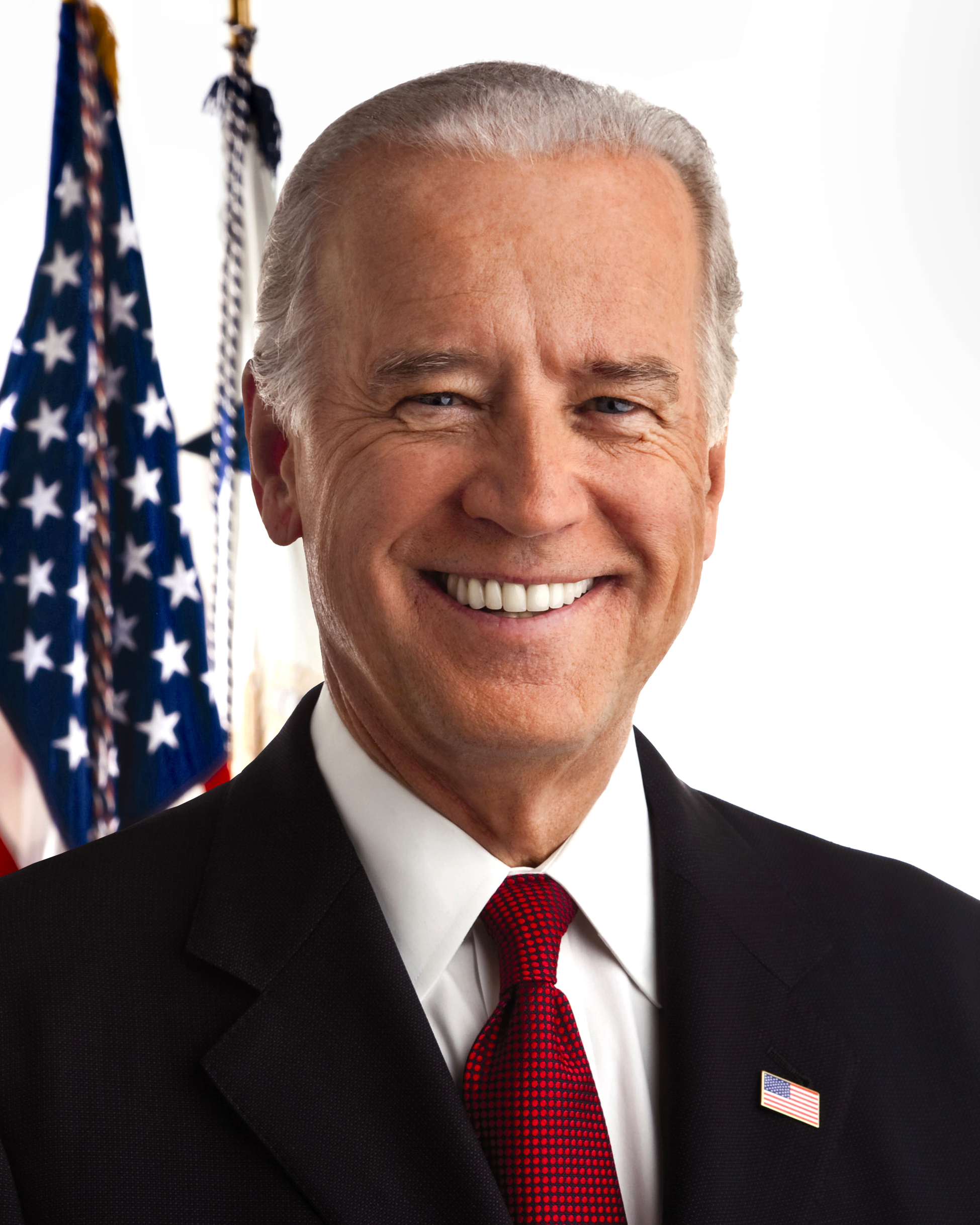
Vice President Joe Biden
(Official Vice Presidential Portrait, 2009)
One of the more disappointing educational developments we've seen since the current presidential administration took over was, of course, the ending of the D.C. Opportunity Scholarship Program back in 2009. And though the program was reauthorized earlier this year, support and funding for the program is always perilous, and the political winds of the day often dictate whether it will be a target, despite its overwhelming success since it was enacted back in 2004.

That's in part why we've been so disappointed about the lack of response from the current crop of Republican presidential candidates to our school choice survey. Though a few have followed up and expressed interest in returning the survey, nobody has made their views public—a worrisome indication to us that we can never rest on our laurels about the future of the program.

Not only can we look to the program's recent history as evidence of the that fact, but going back a decade before reveals just how malleable our elected officials' views on school choice can be over the years.

After all, if the fight over school choice with the president had taken place 14 years ago, there might have been a bit more support at 1600 Pennsylvania Ave.—or, at the very least, at the Naval Observatory.

Wednesday, July 27, 2011

"What Would You Think of a Chef Who Wouldn't Eat At His Own Restaurant?"

There was a big kerfuffle last week when Chicago Mayor Rahm Emanuel got very impatient with a local reporter after she asked him about his decision to send his kids to private schools, despite the fact that Chicago Public Schools fall under mayoral control. Here's a video of the exchange:


Monday, July 18, 2011

In the 'Business' of Helping Kids

Business Leaders and Education Programs: A Combination that Works

President Obama is meeting with business leaders across the nation to talk investment options—for our nation’s K-12 students.  According to a piece in the Wall Street Journal today, the Administration and business leaders are on the same side in investing in innovative education programs, much to the chagrin of special interests, like the teachers’ unions.

But businesses (and individuals) can already participate in innovative education programs that work.  Eight states currently operate scholarship tax credit programs that give hundreds of thousands of students immediate access to a quality education.

With 10 programs operating across the country, businesses and individuals can receive state tax credits for donating money to scholarship organizations that help children attend the private schools of their choice.  Often targeted to help special needs and low-income students, these programs give families a choice in the education for their children. Read the details after the jump.